
How Greater Houston’s Humidity Influences Material Selection for Custom Pools
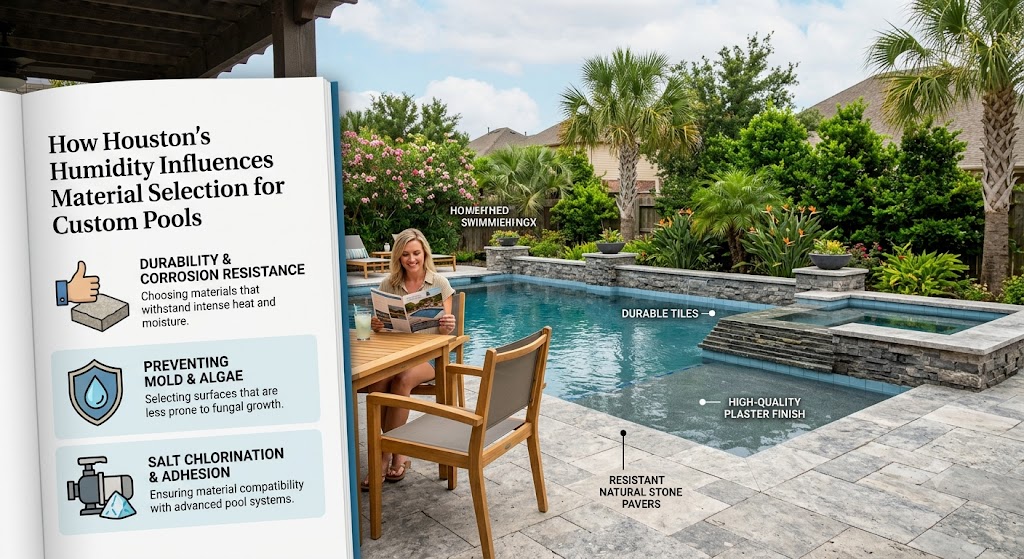
Greater Houston’s climate creates unique considerations for homeowners planning a custom swimming pool. While warm temperatures make pools highly desirable for much of the year, persistent humidity, heavy rainfall, intense sunlight, and changing weather conditions can affect how pool materials perform over time. Choosing materials based solely on appearance can lead to unnecessary maintenance concerns and reduced durability. At U.S. Pool Builder, we understand that successful pool design requires materials that complement both the homeowner’s aesthetic preferences and the realities of the local climate. Every surface, finish, coping material, and surrounding hardscape should be evaluated for its ability to withstand moisture exposure. By making informed material selections from the beginning, homeowners can create a pool environment that remains attractive, functional, and structurally dependable for years.
Understanding Greater Houston’s Humid Climate
Greater Houston is known for long periods of high humidity, particularly during the warmer months when outdoor living spaces receive frequent use. Humidity increases the amount of moisture present in the surrounding environment, which can influence how certain materials expand, contract, absorb water, or develop surface issues. Pools are already moisture-rich environments, so the combination of standing water, airborne humidity, rainfall, and heat creates demanding conditions for construction materials. Materials installed around the pool must be capable of handling repeated wet and dry cycles without deteriorating prematurely. The local climate can also contribute to mold, mildew, algae growth, and surface discoloration when materials are excessively porous or difficult to maintain. Understanding these environmental factors helps us design custom pools with finishes and structural components suited to Greater Houston’s specific conditions.
Choosing Durable Pool Interior Finishes
The interior finish of a swimming pool is continuously exposed to chemically treated water, sunlight, and fluctuating environmental conditions. In a humid climate, selecting a durable finish becomes especially important because moisture can contribute to staining and biological growth around vulnerable surfaces. Plaster remains a popular option, but homeowners should consider the maintenance requirements and long-term performance characteristics of different finish types. Aggregate finishes can provide enhanced durability while also offering visual depth and a broader range of textures and colors. Pebble-based finishes are particularly valued for their natural appearance and resistance to everyday wear. We carefully evaluate the desired appearance, budget, maintenance expectations, and environmental exposure before recommending an interior finish for a custom pool project.
The Importance of Low-Porosity Materials
Porosity is an important consideration when selecting materials for Greater Houston pool environments. Highly porous materials can absorb moisture more easily, potentially leading to staining, discoloration, and increased maintenance requirements. Natural stone can create a beautiful and sophisticated appearance, but different stone varieties perform differently when regularly exposed to humidity and water. Some materials require sealing to reduce moisture penetration and protect their appearance over time. Dense porcelain and properly finished concrete products often offer greater resistance to water absorption while providing a wide range of design possibilities. Selecting low-porosity materials in appropriate areas can help homeowners reduce maintenance demands without sacrificing the visual character of their outdoor space.
Selecting Pool Coping That Handles Moisture
Pool coping serves both practical and aesthetic purposes because it creates a finished transition between the pool structure and the surrounding deck. In Greater Houston’s humid conditions, coping materials should be selected for their ability to withstand moisture exposure while maintaining a safe walking surface. Natural stone, concrete, porcelain, and specialized coping products can all be suitable options when properly chosen and installed. Slip resistance is especially important because humidity and frequent rainfall can keep outdoor surfaces damp for extended periods. Some materials may also become extremely hot under direct sunlight, making thermal performance another important factor in the selection process. We consider moisture resistance, texture, heat retention, maintenance needs, and architectural style to help create coping that performs well throughout the year.
Natural Stone Requires Careful Selection
Natural stone brings texture, character, and visual warmth to custom pool designs, but not every stone is equally suitable for Greater Houston’s climate. Certain porous stones can absorb significant amounts of water and may require regular sealing and maintenance. Other varieties offer greater density and durability, making them more appropriate for areas exposed to splashing, rainfall, and high humidity. The finish applied to the stone also matters because polished surfaces may become slippery when wet. Honed, textured, or naturally cleft finishes can provide better traction while preserving the stone’s visual appeal. When incorporating natural stone into a pool environment, our goal is to balance the homeowner’s preferred aesthetic with realistic expectations regarding maintenance and long-term performance.
Porcelain Offers Strong Moisture Resistance
Porcelain has become an increasingly attractive option for modern pool decks and decorative pool surfaces because of its low water absorption rate. This material can replicate the appearance of natural stone, concrete, or wood while providing a highly consistent and durable surface. In humid environments, its resistance to moisture absorption can help reduce concerns related to staining and water damage. Porcelain is also available in textured finishes designed specifically for wet outdoor areas. Its color stability can be beneficial in spaces exposed to strong sunlight and changing weather conditions. For homeowners seeking a contemporary appearance with relatively straightforward maintenance, porcelain can be an excellent material to consider within a custom pool design.
Concrete and Travertine Have Different Performance Characteristics
Concrete remains one of the most versatile materials for pool decks because it can be shaped, colored, textured, and finished in numerous ways. Properly installed and sealed concrete can perform effectively in Greater Houston’s humid climate, although attention should be given to drainage and surface maintenance. Travertine is another popular pool decking material because its natural texture and ability to remain relatively comfortable underfoot can make it appealing in warm weather. However, as a natural stone, travertine requires proper selection, installation, and maintenance to ensure lasting performance. Its porous structure can be beneficial for drainage in certain applications, but homeowners should understand the cleaning and sealing requirements associated with the material. At U.S. Pool Builder, we help homeowners compare these characteristics so the final selection aligns with both design preferences and practical maintenance expectations.
Tile Selection Matters Beyond Appearance
Tile plays a significant role in defining the personality of a custom swimming pool, particularly along the waterline, steps, benches, and decorative features. In Greater Houston’s climate, tile selection should account for constant exposure to water, heat, humidity, and pool chemicals. Glass tile can create striking visual effects and reflect changing light beautifully, but installation quality and material suitability are essential for long-term performance. Porcelain and ceramic tiles offer extensive design flexibility and can provide dependable performance when selected for pool applications. Grout selection is equally important because poorly suited grout can become more susceptible to staining, cracking, or discoloration in demanding wet environments. Choosing tile as part of a complete material system rather than as an isolated decorative feature helps create a more durable and cohesive pool design.
Moisture and Deck Drainage Work Together
Even the highest-quality materials can experience performance issues when water is allowed to accumulate around the pool. Greater Houston receives substantial rainfall, and high humidity can slow surface drying after storms or routine pool use. Proper deck drainage helps move water away from the pool structure, surrounding hardscape, and nearby foundations. Material selection should therefore be coordinated with the drainage strategy rather than treated as a separate design decision. Certain surfaces may require specific slopes, installation methods, or expansion considerations to accommodate water movement effectively. By addressing drainage early in the design process, we can help protect both the appearance and structural integrity of the outdoor living environment.
Heat, Humidity, and UV Exposure Create Combined Challenges
Humidity is only one part of Greater Houston’s environmental conditions, as intense heat and ultraviolet exposure also affect outdoor materials. A material that performs well against moisture may still fade, become excessively hot, or deteriorate under prolonged sunlight. Pool surfaces need to withstand these combined forces without creating uncomfortable or unsafe conditions for users. Lighter-colored materials may help reduce surface temperatures, while UV-resistant products can maintain their appearance more effectively over time. Sealers and protective treatments can also play an important role in preserving certain natural and manufactured materials. Considering the complete climate profile allows us to recommend materials based on long-term performance rather than focusing on a single environmental factor.
Preventing Mold, Mildew, and Surface Growth
High humidity can create favorable conditions for mold, mildew, and algae growth, particularly in shaded areas around a pool. Materials with rough textures or high porosity may retain moisture longer and require more frequent cleaning. This does not mean textured materials should be avoided, since slip resistance remains important around swimming pools. Instead, the goal is to select finishes that provide adequate traction while remaining manageable from a maintenance perspective. Proper sunlight exposure, drainage, ventilation, and routine cleaning all contribute to controlling unwanted biological growth. Material selection becomes most effective when combined with a thoughtful overall design that prevents excessive moisture from remaining trapped in outdoor surfaces.
The Role of Quality Installation
Even premium materials can fail to perform as expected when installation practices do not account for local environmental conditions. Proper substrate preparation, expansion joints, waterproofing, adhesives, drainage slopes, and sealing procedures all influence long-term durability. Greater Houston’s heat and moisture can place additional stress on materials, making professional installation especially important. Different materials have different expansion characteristics, and these must be considered when creating transitions between pool structures, decks, coping, and decorative surfaces. Experienced construction teams understand that compatibility between materials is just as important as the quality of each individual product. A well-designed custom pool should function as an integrated system where structural, decorative, and environmental considerations support one another.
Matching Materials With the Home’s Architecture
Climate performance should always be a priority, but functionality does not require homeowners to compromise on design. Modern pools may incorporate porcelain, exposed aggregate, glass tile, natural stone, and architectural concrete to create distinctive outdoor environments. Traditional homes may benefit from warmer stone finishes and classic tile combinations, while contemporary properties can embrace clean lines and large-format materials. The most successful designs combine visual consistency with materials appropriate for Greater Houston’s environmental conditions. Color, texture, scale, and maintenance requirements should all be considered alongside humidity resistance and durability. Our design approach focuses on helping homeowners create outdoor spaces where architectural style and practical material performance work together naturally.
Making a Long-Term Investment in the Right Materials
A custom pool represents a significant investment, so material decisions should be based on long-term value rather than initial appearance alone. Less expensive materials may seem attractive at first but can result in greater maintenance costs if they are poorly suited to constant moisture and changing weather conditions. Durable materials, proper installation, and preventative maintenance can help protect the investment while preserving the appearance of the outdoor space. Homeowners should also consider how frequently they plan to use the pool and how much ongoing maintenance they are comfortable managing. Families seeking a low-maintenance environment may prioritize different materials than homeowners who are willing to maintain natural stone finishes for a more distinctive appearance. At U.S. Pool Builder, we believe the best material selection process considers durability, beauty, safety, maintenance, and Greater Houston’s climate as equally important parts of the final decision.
Creating a Pool Built for Greater Houston’s Environment
Greater Houston’s humidity should not be viewed as an obstacle to creating a beautiful custom pool, but it should influence how the project is designed and constructed. The right combination of interior finishes, coping, tile, decking, drainage, and protective treatments can significantly improve long-term performance. Careful planning helps reduce unnecessary maintenance concerns while allowing homeowners to achieve a highly personalized outdoor environment. Materials should be selected based on how they will perform together under real-world conditions, including rain, heat, sunlight, moisture, and regular pool use. By taking a climate-conscious approach from the earliest stages of design, we can create spaces that remain comfortable, attractive, and functional throughout changing seasons. A thoughtfully designed custom pool built with suitable materials can provide Greater Houston homeowners with years of enjoyment while maintaining the quality and visual appeal that made the investment worthwhile in the first place.