
Why Pool Lighting Matters for Your Outdoor Living Space
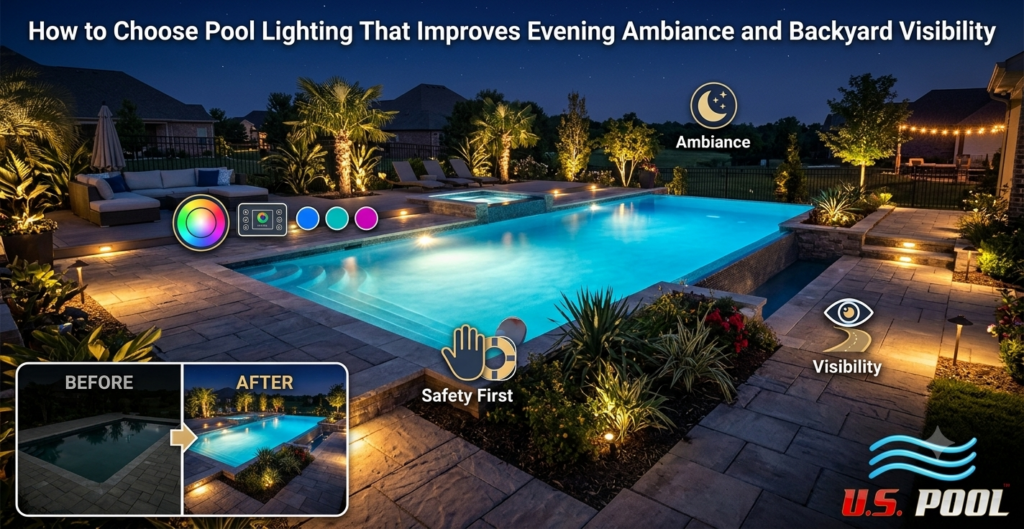
A swimming pool can become one of the most inviting features of a backyard when the sun goes down, provided the lighting is designed thoughtfully. The right pool lighting creates a relaxing atmosphere, highlights the beauty of the water, and makes the surrounding outdoor space more functional after dark. Whether you enjoy quiet evenings with family, host weekend gatherings, or spend time entertaining guests outdoors, a well-lit pool area can improve the entire experience. However, choosing pool lighting involves more than selecting attractive fixtures or adding colorful lights beneath the water. We recommend considering visibility, safety, energy efficiency, fixture placement, and the overall design of your backyard before making a decision. By understanding how different lighting options work together, homeowners can create an outdoor environment that looks beautiful while remaining practical for evening use.
Understanding the Different Types of Pool Lighting
The first step in choosing pool lighting is understanding the available fixture types and how each option contributes to the overall design. Underwater LED lights are among the most popular choices because they illuminate the pool interior, emphasize water movement, and create a visually appealing nighttime appearance. Traditional white pool lights provide consistent illumination and suit homeowners who prefer a clean, timeless aesthetic. Color-changing LED fixtures offer additional flexibility, allowing you to adjust the atmosphere for different occasions, from peaceful evenings to lively backyard parties. Beyond the pool itself, landscape lighting, pathway lights, wall fixtures, and recessed deck lights help illuminate the surrounding environment. At U.S. Pool Builder, we encourage homeowners to consider a coordinated lighting plan rather than relying on a single type of fixture to illuminate the entire outdoor area.
Choosing Between White and Color-Changing Pool Lights
White and color-changing pool lights each offer distinct advantages, so the right option depends on your preferences and how you plan to use your pool. White lighting creates a classic appearance that complements a wide range of pool shapes, finishes, and backyard styles. It can also make underwater steps, benches, and other pool features easier to distinguish when the fixtures are positioned and sized appropriately. Color-changing LED lights provide more opportunities to customize your outdoor environment, with different settings suited to celebrations, social gatherings, or relaxed evenings. Some systems allow you to select individual colors, transition between shades, or coordinate multiple fixtures through a compatible controller. When comparing these options, we suggest prioritizing reliable illumination and ease of operation before choosing decorative features, ensuring that the lighting serves your practical needs as well as your design preferences.
Prioritizing Visibility and Safety Around the Pool
Good pool lighting should help people recognize changes in depth, identify entry and exit points, and move around the surrounding deck with greater confidence. Poorly positioned fixtures can create harsh glare, dark corners, and reflections that make it difficult to distinguish important details. Underwater lights should distribute illumination across the pool rather than leaving substantial areas in shadow, particularly around steps, benches, tanning ledges, and transitions between shallow and deep sections. The surrounding deck also requires careful attention because wet surfaces can become slippery and obstacles may be difficult to notice in dim conditions. Pathway lighting and low-glare fixtures can improve visibility near outdoor stairs, gates, seating areas, and routes between the house and the pool. We recommend treating safety illumination as a central part of the design instead of assuming that attractive underwater lighting alone will make the entire backyard suitable for nighttime use.
Selecting the Right Brightness for Your Pool
Choosing the appropriate brightness is essential for creating an environment that feels comfortable rather than excessively illuminated. A small residential pool may require a different lighting arrangement from a large pool with multiple depths, architectural features, or an extensive surrounding deck. The number of fixtures, their light output, their beam distribution, and the color of the pool interior all influence the final result. Darker pool finishes may absorb more light and create a deeper visual appearance, while lighter finishes can reflect illumination more effectively and make the water appear brighter. Increasing brightness indiscriminately is not always the best solution because excessive light can cause glare and reduce the relaxing atmosphere many homeowners want to achieve. Our approach is to consider the pool’s dimensions, finish, layout, and intended use together so the lighting provides balanced illumination without overwhelming the outdoor space.
Using LED Technology for Energy Efficiency
LED pool lighting is a practical option for homeowners who want attractive illumination while managing long-term energy consumption. Compared with many traditional lighting technologies, LEDs generally use less electricity for a comparable lighting output and can offer a longer service life under suitable operating conditions. Their efficiency makes them particularly appealing for households that regularly use the pool during evening hours or illuminate several outdoor areas simultaneously. LED fixtures are available in different brightness levels, color temperatures, shapes, and control configurations, giving homeowners considerable flexibility during the design process. Some systems also support dimming, scheduling, or smart controls, although compatibility depends on the specific fixtures and control equipment selected. When evaluating products, we suggest looking beyond the initial purchase price and considering energy use, expected service life, replacement requirements, manufacturer support, and the suitability of the fixtures for their intended installation environment.
Creating a Balanced Lighting Plan for the Entire Backyard
The most attractive pool lighting designs consider the entire backyard rather than treating the water as an isolated feature. Underwater illumination establishes the visual centerpiece, while landscape lights can highlight trees, ornamental plants, garden beds, and architectural details. Deck lighting helps define the usable space around the pool, and pathway fixtures provide illumination along common walking routes. Wall-mounted lights and appropriately positioned outdoor fixtures can also improve visibility near patios, outdoor kitchens, and covered seating areas. The key is to establish a visual hierarchy in which the pool remains prominent without leaving important surrounding areas poorly illuminated. We recommend combining different lighting layers carefully, using softer accent lighting for decorative features and more purposeful illumination where people walk, gather, or access the pool.
Matching Pool Lighting to Your Backyard Design
Pool lighting should complement the architectural style of your home, the materials used around the pool, and the atmosphere you want to create outdoors. A contemporary backyard with clean lines and minimalist landscaping may benefit from discreet fixtures, subtle white illumination, and carefully controlled accent lighting. A traditional outdoor space may look more inviting with warm-toned landscape lighting, illuminated planting beds, and understated deck fixtures. Natural stone, decorative tile, textured concrete, and water features can all respond differently to artificial light, making fixture placement and color temperature important design considerations. Homeowners should also consider how lighting appears from inside the house, especially through large windows overlooking the pool or patio. At U.S. Pool Builder, we believe that successful lighting design should enhance the property’s existing character while creating a consistent transition between indoor living spaces and the backyard.
Illuminating Pool Steps, Ledges, and Water Features
Special attention should be given to pool features that affect movement or contribute significantly to the appearance of the water. Entry steps, built-in benches, tanning ledges, and changes in depth can become difficult to identify when lighting is insufficient or unevenly distributed. Properly planned illumination can make these areas easier to distinguish while emphasizing the pool’s shape and design details. Waterfalls, fountains, spillways, and other water features may also benefit from dedicated lighting that highlights the movement and texture of the water after sunset. However, decorative fixtures should be positioned to avoid uncomfortable glare for swimmers and people relaxing nearby. We advise evaluating each feature individually so that functional illumination and decorative effects complement each other without creating distracting bright spots or unnecessary shadows.
Reducing Glare and Preventing Light Pollution
Excessive lighting can diminish the comfort of a backyard even when the fixtures themselves are attractive. Bright lights directed toward seating areas, neighboring properties, or bedroom windows may cause discomfort and interfere with the peaceful atmosphere homeowners want to enjoy. Reflections from the water can also become distracting when fixtures are positioned poorly or produce concentrated beams at unfavorable angles. Shielded landscape lights, carefully aimed fixtures, appropriate brightness levels, and well-planned controls can help manage these issues. Homeowners should also consider the surrounding environment, including nearby residences, mature trees, and areas where darkness is desirable. Our recommendation is to use illumination strategically, directing light toward the surfaces and features that need it instead of flooding the entire backyard with uniform brightness.
Exploring Smart Controls and Automated Lighting
Modern pool lighting systems can offer greater convenience through remote controls, programmable schedules, dimming functions, and smart home integration. Depending on the system, homeowners may be able to change colors, adjust brightness, or activate selected lighting zones without operating each fixture individually. Automated schedules can help ensure that pathway and landscape lights operate during expected evening activity and switch off when they are no longer needed. Separate control zones are especially useful for larger backyards because the pool, patio, garden, and walkways may require different lighting levels at different times. For example, a homeowner may prefer brighter illumination around the pool during use and softer accent lighting when the evening becomes more relaxed. Before selecting an automated system, we suggest confirming that the controls are compatible with the fixtures, transformers, and other equipment included in the installation.
Understanding Pool Lighting Installation and Electrical Safety
Pool lighting must be selected and installed with particular attention to electrical safety because water, wet surfaces, and electrical equipment require appropriate protective measures. Underwater fixtures, junction boxes, transformers, wiring, and control equipment must be suitable for their intended locations and installed according to applicable electrical codes and manufacturer instructions. Depending on the project and local requirements, installation may involve ground-fault circuit interrupter protection, bonding, grounding, and other safeguards designed for swimming pool environments. Homeowners should not assume that an ordinary outdoor light fixture is suitable for underwater use or for installation near a pool. Any work involving pool electrical systems should be handled by qualified professionals familiar with the applicable requirements and the specific equipment being installed. We encourage homeowners to discuss installation methods, inspection requirements, maintenance access, and equipment ratings before finalizing their lighting plans.
Considering Maintenance and Long-Term Reliability
The durability of pool lighting depends on fixture quality, installation conditions, maintenance practices, and the environment in which the equipment operates. Underwater lights must be designed for their intended submerged application, while outdoor fixtures need appropriate protection against moisture, weather, and other environmental conditions. Homeowners should review the manufacturer’s maintenance instructions and understand whether bulbs, complete fixtures, seals, or control components may require eventual replacement. Accessibility is another important consideration because difficult-to-reach fixtures can make future servicing more complicated and expensive. It is also helpful to choose products with clear warranty terms, readily available replacement components, and dependable technical support. By evaluating long-term maintenance alongside appearance and price, we help homeowners make decisions that support dependable performance and reduce the likelihood of avoidable repair expenses.
Evaluating the Cost of Pool Lighting
The cost of a pool lighting project varies according to the size of the pool, the number and type of fixtures, installation complexity, electrical requirements, and the amount of surrounding landscape lighting involved. Replacing an existing fixture may require a different budget from installing a complete lighting system in a newly constructed pool. Smart controls, color-changing technology, premium materials, and specialized water feature lighting can also influence the overall investment. Homeowners should consider the complete project cost rather than comparing fixtures solely by their purchase prices. Installation labor, electrical upgrades, compatible control equipment, future maintenance, and expected energy consumption can all affect the long-term value of the system. At U.S. Pool Builder, we recommend establishing priorities early, allocating sufficient resources to safety and essential illumination, and then evaluating decorative upgrades that fit the remaining budget.
Common Pool Lighting Mistakes to Avoid
Several common mistakes can prevent homeowners from achieving the appearance and functionality they expect from their pool lighting. Installing too few fixtures may leave dark areas around the pool, while choosing excessively bright lights can create glare and make the space uncomfortable. Another frequent mistake is focusing entirely on underwater illumination without considering steps, pathways, seating areas, and other parts of the backyard. Selecting fixtures based only on appearance can also lead to compatibility problems, unnecessary maintenance, or equipment that is unsuitable for the intended location. Homeowners sometimes overlook future servicing requirements and discover that replacing a fixture is more complicated than expected. We recommend planning the entire lighting layout before installation, confirming equipment specifications, and reviewing the finished design from several viewpoints to identify potential visibility and glare issues.
Planning Pool Lighting for Different Evening Activities
The ideal lighting arrangement should reflect how your household uses the pool and backyard throughout the week. Families who regularly swim in the evening may prioritize clear underwater visibility, illuminated steps, and well-lit access routes. Homeowners who entertain guests may prefer a combination of functional pool lighting, softer patio illumination, and decorative accents around landscaping or water features. Those who mainly relax outdoors after sunset may favor warm landscape lighting, restrained brightness, and dimmable fixtures that create a calm atmosphere. A flexible system with separate lighting zones can accommodate these different activities without requiring every fixture to operate at the same intensity. By identifying your primary uses before choosing equipment, you can create a lighting plan that remains useful for everyday routines as well as special occasions.
Finalizing the Right Pool Lighting Design
Choosing pool lighting that improves evening ambiance and backyard visibility requires a balance of appearance, functionality, safety, energy efficiency, and long-term value. Start by identifying the areas that need illumination, including the pool interior, entry steps, deck, pathways, and nearby seating spaces. Then compare suitable fixture types, brightness levels, color options, and control features while considering the size and finish of your pool. Pay close attention to glare reduction, electrical safety, maintenance access, and compatibility between the different components in your lighting system. A carefully planned design can make your backyard more inviting after dark while helping people navigate the space more confidently. With a clear understanding of your priorities and professional guidance where needed, you can choose pool lighting that supports your lifestyle and complements your outdoor living environment.
Transform Your Backyard With Thoughtful Pool Lighting
A well-designed pool lighting system can turn an ordinary backyard into a welcoming outdoor retreat that remains enjoyable long after sunset. The right combination of underwater fixtures, landscape accents, deck lighting, and pathway illumination helps establish a comfortable atmosphere while improving visibility in important areas. Choosing suitable equipment from the beginning can also support energy efficiency, simplify maintenance, and reduce the risk of expensive installation mistakes. Every property has different lighting requirements, so the most effective solution should account for the pool’s dimensions, surrounding features, architectural style, and intended use. U.S. Pool Builder can help homeowners evaluate their pool design and consider lighting options that balance visual appeal with practical performance. By investing in a coordinated lighting plan, you can make evening swimming, outdoor entertaining, and quiet backyard relaxation more enjoyable for years to come.