
Why Elevation Changes Matter When Building a Swimming Pool in Greater Houston
Building a swimming pool involves far more than choosing a shape, selecting finishes, and deciding where to place the spa. One of the most important technical factors is the elevation of the property and how the land changes across the construction area. Greater Houston properties can present subtle or significant grade variations that directly influence pool design, drainage, structural planning, and long-term performance. Even a yard that appears relatively flat can have elevation differences that become important once excavation and construction begin. Understanding these changes before construction allows us to create a pool environment that works naturally with the property instead of forcing the property to accommodate the pool. Proper elevation planning can also prevent expensive corrections after the project is completed. At U.S. Pool Builder, we evaluate site conditions carefully so that every pool design is based on the realities of the land.
Understanding Elevation in Pool Construction
Elevation refers to the vertical height of one point on a property compared with another point or an established reference level. When planning a swimming pool, we examine how the backyard slopes from the house toward property boundaries and throughout the proposed pool area. A difference of only a few inches can affect where water naturally travels during rainfall. Larger changes in grade can influence excavation depth, retaining requirements, decking transitions, and the final visual relationship between the pool and the home. Greater Houston receives substantial rainfall throughout the year, which makes understanding natural water movement especially important during pool construction. If elevation changes are ignored, water can collect in undesirable areas or move toward structures where it may create future problems. A professional assessment allows us to identify these conditions early and incorporate appropriate solutions into the design.
Proper Drainage Starts With Accurate Elevation Planning
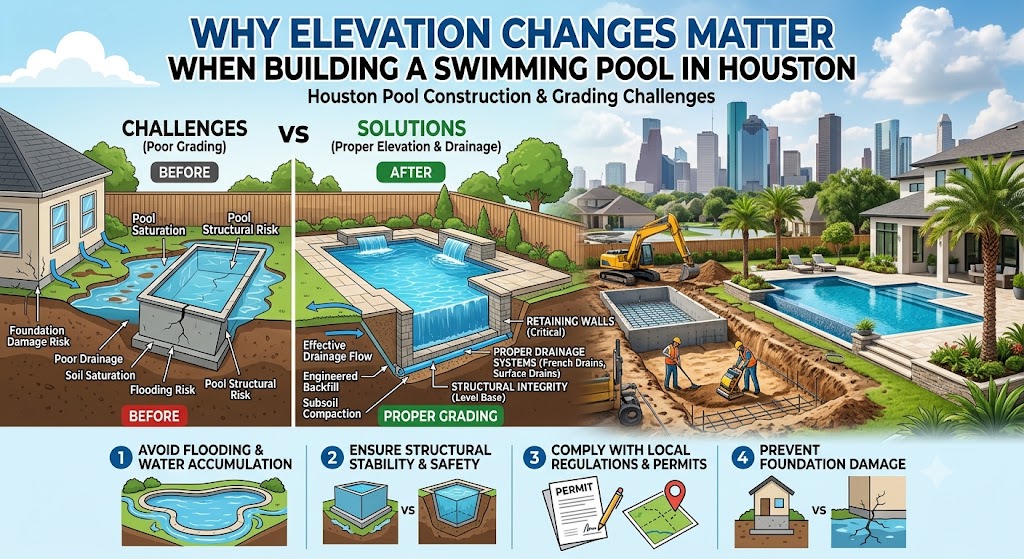
Drainage is one of the primary reasons elevation changes matter when constructing a swimming pool in Greater Houston. Heavy rain can introduce a significant amount of water into a backyard within a short period, and the landscape must have a clear plan for directing that water safely. A new pool, deck, patio, and landscaping can alter the way water previously moved across the property. Without proper grading, runoff may collect around the pool deck, near the home’s foundation, or against other structures. We study the existing slopes and establish finished elevations that encourage water to move toward appropriate drainage areas. This planning may involve deck slopes, channel drains, grading adjustments, and carefully positioned landscape features. When drainage is considered from the beginning, the finished outdoor space is better prepared to handle Greater Houston’s demanding weather conditions.
Elevation Affects the Relationship Between the Pool and the House
The finished height of a swimming pool should complement the elevation of the home and surrounding outdoor living areas. A pool placed too high relative to the house may create awkward transitions, excessive steps, or drainage concerns near doors and patios. On the other hand, placing a pool too low can make the space feel disconnected and may increase the amount of excavation required. The ideal design considers how people will physically move from the house into the pool area. We evaluate existing patio elevations, door thresholds, outdoor kitchens, covered spaces, and other architectural features before establishing the final pool height. This creates smoother transitions and helps the completed project feel intentional rather than added as an afterthought. Careful elevation coordination can significantly improve both the usability and visual quality of the entire backyard.
Excavation Requirements Can Change Significantly
Changes in elevation directly affect how much excavation is required during pool construction. If one side of the proposed pool location sits higher than another, excavation crews may need to remove substantially different amounts of soil across the site. This can influence project logistics, soil management, access requirements, and construction sequencing. In some situations, a pool design may need adjustment to reduce unnecessary excavation while still achieving the desired appearance and functionality. The depth of the pool also interacts with existing grades, making accurate measurements essential before construction begins. A sloped property may require more detailed engineering than a relatively level backyard. By understanding these conditions early, we can develop a construction approach that is practical and appropriate for the site. This proactive planning helps reduce surprises once excavation equipment arrives.
Retaining Walls May Be Necessary on Sloped Properties
Properties with more noticeable elevation changes may require retaining structures as part of the pool project. A retaining wall can help manage soil between two different grades while creating a clean and functional transition within the landscape. These structures can also become attractive architectural features when integrated properly into the overall pool design. For example, a raised planting area or seating wall can serve a practical purpose while improving the visual character of the backyard. The need for a retaining solution depends on the amount of grade change, soil conditions, nearby structures, and the proposed pool location. We consider both structural requirements and aesthetic opportunities when working with challenging elevations. Properly designed retaining elements can transform a difficult slope into a distinctive feature of the outdoor environment. Instead of viewing elevation changes as limitations, thoughtful planning can turn them into design advantages.
Pool Decking Requires Precise Slope Calculations
A beautiful pool deck must also perform properly during periods of rain, which makes elevation and slope calculations extremely important. Deck surfaces should generally direct water away from structures while preventing excessive water from flowing into the pool. Incorrect slopes can lead to standing water, slippery surfaces, and drainage issues that affect the enjoyment of the outdoor space. Even large-format pavers and decorative concrete require careful installation based on the planned finished elevations. The transition between different deck areas must also be considered so that the space remains comfortable and accessible. We coordinate the elevations of pool coping, decking, patios, and surrounding landscape areas to create a cohesive result. Small measurement errors can become much more noticeable after construction is complete. Accurate planning helps ensure that the outdoor surfaces look refined while functioning effectively.
Elevation Influences Pool Equipment Placement
Pool equipment needs a suitable location that considers both accessibility and elevation. Pumps, filters, heaters, automation systems, and other components must be positioned according to technical requirements and the overall site layout. Changes in grade can affect plumbing runs and influence how easily equipment can be integrated into the property. Equipment areas should also be protected from potential flooding or excessive surface water. In a Greater Houston backyard, this becomes particularly important because intense rainstorms can quickly affect low-lying areas. We review the site’s elevation conditions when determining practical equipment locations that support reliable operation and convenient maintenance. Proper planning also helps preserve the visual appeal of the backyard by avoiding equipment placement that disrupts major entertaining areas. A well-designed pool project considers these functional details alongside the more visible architectural features.
Existing Utilities Can Be Affected by Grade Changes
Underground utilities are another important consideration when evaluating elevation changes before pool construction. Drainage lines, irrigation systems, electrical connections, gas lines, and other infrastructure may need to be identified before excavation begins. Changes to the finished grade can affect the depth and routing of certain utility systems. Construction planning must account for these elements to avoid conflicts and unnecessary modifications later in the project. A comprehensive site evaluation helps identify potential challenges before the final design is established. This information allows us to coordinate the pool layout with existing infrastructure rather than discovering issues during construction. It can also help determine whether certain areas of the property are better suited for the pool, patio, or landscape features. Early coordination creates a more efficient construction process and reduces the likelihood of costly site adjustments.
Elevation Can Create More Interesting Pool Designs
Not every elevation change should be eliminated because changes in grade can create opportunities for unique and visually striking pool designs. A sloped backyard may allow for raised spas, cascading water features, elevated tanning areas, or multi-level entertainment spaces. These elements can create depth and dimension that would be difficult to achieve on a completely flat property. A carefully positioned infinity edge or raised wall can also take advantage of the natural characteristics of the land. The key is understanding which elevation changes should be preserved and which should be modified for functional reasons. We approach the site as part of the design process rather than treating the land as an obstacle that must be completely leveled. This perspective can lead to a more customized pool environment with stronger architectural character. When properly planned, variations in elevation can become some of the most memorable features of the finished project.
Soil and Structural Considerations Are Connected to Elevation
Elevation planning is closely connected to soil conditions and structural construction requirements. Excavating into different portions of a sloped property may expose varying soil conditions that need to be evaluated during construction. The way soil is cut, filled, compacted, and supported can influence the long-term stability of surrounding surfaces. Pool shells, decking, retaining walls, and landscaping all depend on appropriate site preparation. Poorly managed grade changes can contribute to settlement issues or surface movement over time. We consider how the proposed pool construction interacts with the existing terrain and the supporting ground conditions. This allows important structural decisions to be made before the project reaches advanced construction stages. A strong pool design is not only about what homeowners see after completion but also about the planning that supports the project beneath the surface.
Landscaping Must Work With the Final Grades
The landscape surrounding a new pool should be designed around the finished elevations rather than treated as a separate consideration. Plants, lawn areas, decorative beds, and hardscape features can all influence how water moves through the backyard. Raised planting beds may require retaining edges, while lower areas may need additional drainage planning. The final grades also affect where trees and larger plants can be positioned safely around the pool environment. We coordinate the overall layout so that landscaping enhances the pool without creating drainage complications. A cohesive approach allows patios, greenery, and architectural elements to work together as one complete outdoor environment. This is particularly valuable when transforming an existing backyard with multiple grade changes. The result is a space that feels balanced, functional, and visually connected from every area of the property.
Early Site Evaluation Helps Avoid Expensive Changes
One of the greatest benefits of evaluating elevation before finalizing a pool design is the ability to identify challenges early. Changing a design on paper is significantly easier than modifying completed excavation, decking, or structural work. Accurate site measurements provide essential information that guides the placement, height, and construction strategy for the pool. They can reveal drainage concerns, access limitations, retaining needs, and transition challenges before construction begins. This allows homeowners to make informed decisions with a clearer understanding of how the project will interact with their property. At U.S. Pool Builder, we believe that careful preparation is essential to delivering a pool that performs as beautifully as it looks. Investing time in understanding the site’s natural characteristics creates a stronger foundation for every stage that follows. Proper planning ultimately supports better construction quality and a more predictable project experience.
Building a Greater Houston Pool That Works With Your Property
Every property has unique characteristics, and elevation is one of the most important factors that should influence swimming pool design. Greater Houston homeowners may focus first on pool style, water features, and outdoor aesthetics, but the underlying site conditions are equally important to long-term success. A properly planned project accounts for natural slopes, rainfall patterns, drainage requirements, structural conditions, and the connection between the home and outdoor spaces. Addressing these factors early helps create a backyard that feels natural, functional, and well integrated with the property. Elevation changes do not necessarily make pool construction more difficult, but they do require knowledgeable planning and careful execution. Our goal is to understand the land before shaping it into a finished outdoor environment that meets both practical and aesthetic expectations. U.S. Pool Builder approaches each project with careful attention to site conditions so homeowners can enjoy a pool designed specifically for their property. When elevation is handled correctly from the beginning, the finished swimming pool can provide lasting beauty, functionality, and confidence for years to come.