
How Greater Houston Rainfall Patterns Should Influence Swimming Pool Drainage Design
Understanding Greater Houston’s Unique Rainfall Challenges
Greater Houston is known for its warm climate, long swimming season, and frequent periods of intense rainfall. While rainfall is beneficial for landscaping and local ecosystems, it can create significant challenges for residential swimming pools when drainage has not been properly considered during the design and construction process. The region experiences sudden thunderstorms, prolonged heavy rain events, and periods of substantial precipitation that can quickly overwhelm poorly designed outdoor spaces. A swimming pool is not an isolated feature, because the surrounding patio, landscaping, rooflines, and property grading all influence how water moves around it. When excessive stormwater collects near the pool structure, it can affect decking, foundations, landscaping, and the overall usability of the backyard. At U.S. Pool Builder, we believe that understanding local rainfall patterns should be an essential part of designing a pool that performs reliably throughout the year.
Why Site Grading Matters Before Pool Construction
Proper drainage begins long before the pool shell is constructed or the decorative finishes are selected. The natural slope of the property determines where rainwater will travel during a storm, making site grading one of the most important considerations in the planning process. A backyard that appears relatively flat during dry weather may reveal significant drainage problems when Greater Houston receives several inches of rain in a short period. Water should generally be directed away from structures and carefully managed around the pool deck to prevent unwanted pooling. Poor grading can cause runoff to collect against the pool coping or flow toward nearby foundations, creating long-term maintenance concerns. Evaluating elevation changes and natural water flow before construction allows a pool design to work with the property rather than attempting to correct drainage problems after installation.
Designing Pool Decks for Effective Surface Drainage
The pool deck plays a major role in controlling rainwater because it creates a large hard surface that can quickly collect precipitation. During heavy storms, water must have a clear path away from the swimming area rather than remaining on the deck or flowing directly into the pool. Proper deck slopes help guide surface water toward designated drainage areas while maintaining a comfortable and visually appealing outdoor environment. Even a slight error in slope can cause water to accumulate in low spots, creating slippery surfaces and increasing the likelihood of staining or surface deterioration. The drainage strategy should also consider furniture areas, outdoor kitchens, walkways, and covered patios that may alter the natural movement of water. A well-designed deck combines functionality and aesthetics so homeowners can enjoy a clean and comfortable outdoor space even after significant rainfall.
Managing Runoff From Roofs and Nearby Structures
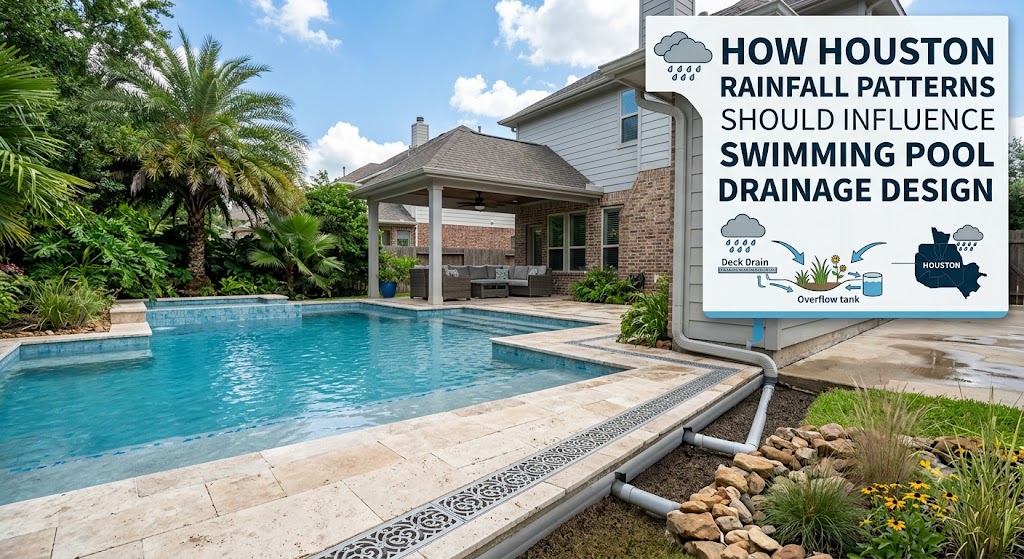
One of the most overlooked sources of water around a swimming pool is runoff from the home itself. Greater Houston storms can produce large volumes of water that move quickly through gutters, downspouts, and roof drainage systems. If downspouts discharge directly toward the pool deck, the concentrated flow can overwhelm surface drainage and create erosion around landscaping features. Water from the roof should be directed toward appropriate collection or discharge areas that do not interfere with the swimming pool environment. This requires coordination between the pool layout and the existing drainage characteristics of the home. Considering roof runoff during the design phase can prevent situations where heavy rain repeatedly deposits water, debris, and sediment into the pool area.
The Importance of Channel and Area Drains
Many Greater Houston pool projects benefit from strategically placed drainage systems that capture water before it becomes a problem. Channel drains can be particularly useful along patios, covered structures, and areas where water naturally tends to collect. Area drains can also help manage concentrated runoff from landscaped sections or low points within the backyard. The placement of these drainage components should be based on actual water flow patterns rather than simply adding drains wherever space is available. An improperly positioned drain may provide little benefit during a major storm if water cannot naturally reach it. Effective drainage design requires careful planning to ensure collection points, underground piping, and discharge locations work together as one complete system.
Protecting the Pool From Excessive Stormwater
Heavy rainfall can introduce more than just additional water into a swimming pool. Stormwater flowing across patios and landscaping can carry soil, mulch, leaves, fertilizers, and other debris into the pool if the surrounding drainage system is inadequate. This contamination can affect water chemistry and increase the amount of cleaning required after storms. Excessive runoff may also contribute to cloudy water and place additional demands on filtration equipment. By controlling the direction of surface water, homeowners can reduce the amount of outside material entering the pool during severe weather. A thoughtful drainage plan helps protect both the appearance of the pool and the efficiency of the systems responsible for maintaining clean water.
Considering Greater Houston’s Intense Short-Duration Storms
Drainage systems should not be designed only for average rainfall conditions because Greater Houston can experience intense storms that release large amounts of water within a relatively short period. A backyard drainage system that performs adequately during light rain may struggle when sudden thunderstorms create rapid surface runoff. This is why drainage capacity and water flow speed should be considered during the planning stage. Low points around the pool require particular attention because they can become collection areas during severe weather events. The system should provide a reliable route for water to move away without causing erosion or overwhelming nearby areas of the property. Designing with intense rainfall events in mind provides greater resilience and reduces the likelihood of unexpected drainage failures.
Landscaping Should Support the Drainage Strategy
Landscaping can either improve or interfere with pool drainage depending on how it is designed. Dense planting areas, raised garden beds, decorative borders, and retaining features can redirect water in ways that were not originally anticipated. Soil type and compaction also influence how quickly rainwater can be absorbed into the ground. In areas with heavy rainfall, landscaping should complement the overall grading and drainage plan instead of blocking natural water pathways. Properly selected plants and surface materials can help manage moisture while reducing erosion around the pool environment. When we plan outdoor spaces, we consider landscaping as part of the larger drainage system rather than treating it as a purely decorative element.
Preventing Erosion Around Pool Structures
Repeated exposure to uncontrolled runoff can gradually erode soil around patios, landscaping, and other backyard features. Although erosion may initially appear to be a minor cosmetic issue, it can eventually create uneven surfaces and expose areas that require repair. Water moving rapidly across the property can carry away soil and destabilize carefully designed landscaping features. Areas near drainage outlets require particular attention because concentrated discharge can create channels in the ground over time. Proper drainage design reduces the speed and concentration of runoff before it has an opportunity to damage the property. Protecting the soil around the pool contributes to a more stable and attractive backyard environment over the long term.
Drainage Planning for Covered Outdoor Living Areas
Modern swimming pool projects often include outdoor kitchens, patios, pergolas, and covered entertainment spaces. These features can significantly change how rainwater moves through a backyard because they create additional roof surfaces and hardscape areas. Water that previously absorbed into the soil may instead flow across concrete or tile surfaces toward the pool area. Drainage should therefore be evaluated whenever additional outdoor structures are incorporated into the design. The connection between covered spaces and open pool decks must allow water to move safely without creating standing water near seating or cooking areas. Integrating drainage into the complete outdoor living plan produces a more functional environment during Greater Houston’s changing weather conditions.
Why Drainage Should Be Integrated Into the Initial Pool Design
Attempting to solve drainage problems after a swimming pool has been completed can be more complicated and expensive than addressing them during the original construction process. Retrofitting drains may require removing sections of decking, modifying landscaping, or installing new underground piping around finished features. Early planning allows drainage infrastructure to be incorporated seamlessly into the overall design. It also gives homeowners more flexibility when determining the placement of patios, landscaping, equipment, and outdoor structures. A comprehensive approach considers both the immediate appearance of the backyard and how the space will perform during heavy rain. At U.S. Pool Builder, we focus on integrating practical site considerations into the design process so the finished pool area is prepared for real-world weather conditions.
Creating a More Resilient Greater Houston Backyard
A beautiful swimming pool should be designed for more than sunny afternoons and calm weather. Greater Houston homeowners need outdoor spaces that can handle frequent rainfall, sudden storms, and significant changes in water volume without creating unnecessary maintenance issues. Proper grading, deck slopes, drainage collection systems, roof runoff management, and landscaping coordination all contribute to a stronger overall design. Each component should work together to guide water safely through and away from the pool environment. When drainage is treated as a fundamental design consideration, homeowners can reduce standing water, erosion, debris accumulation, and other problems associated with heavy rainfall. By planning for Greater Houston’s climate from the beginning, U.S. Pool Builder helps create swimming pool environments that are not only visually impressive but also practical, durable, and prepared for changing weather conditions.