
Why a Custom Pool Is More Than a Backyard Feature
A custom swimming pool may appear to be a simple combination of water, tile, concrete, and equipment, but the engineering behind it begins long before construction starts. On a Greater Houston residential lot, every design decision has to account for soil conditions, drainage, property dimensions, structural requirements, utilities, and local environmental factors. Our approach begins by understanding how these conditions interact rather than treating the pool as an isolated feature in the backyard. The shape, depth, plumbing configuration, structural reinforcement, and equipment placement can all influence the long term performance of the finished pool. This is why two properties with similar dimensions can require completely different engineering solutions. At U.S. Pool Builder, we consider these hidden factors during planning so that the finished pool works naturally with the property instead of simply occupying available space.
Understanding the Greater Houston Soil Beneath the Pool
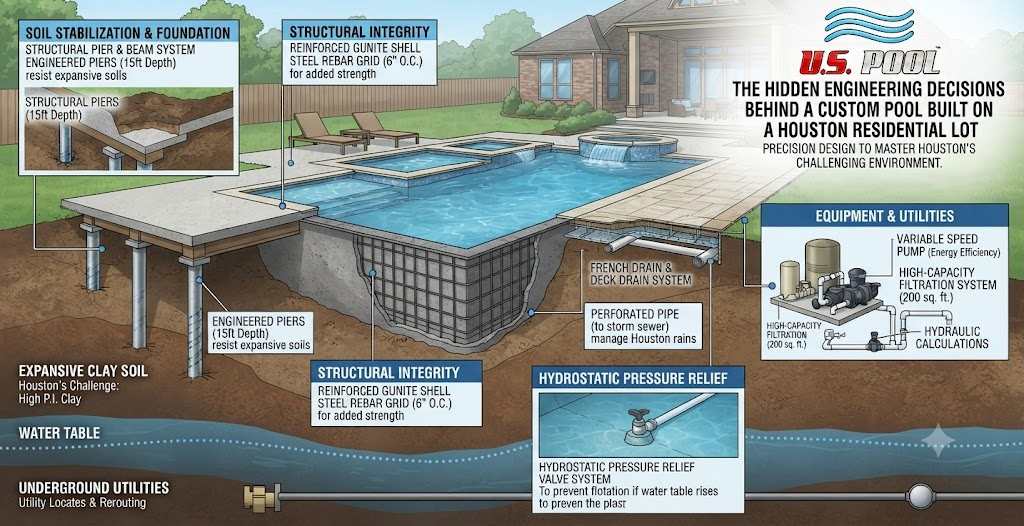
One of the most important engineering considerations is what exists below the surface of the proposed pool. Greater Houston has areas where expansive clay soils can create significant movement as moisture conditions change throughout the year. Soil movement can place stress on pool structures, surrounding decks, plumbing connections, and other components if the design does not account for site conditions. Before excavation begins, our planning process considers the characteristics of the property and the structural requirements associated with the proposed pool. The goal is to create a structure that can perform reliably under the conditions expected at the site. Proper engineering at this stage can help reduce the likelihood of structural problems that are far more difficult and expensive to address after construction.
Managing Water Around the Pool Structure
Drainage is another hidden engineering decision that can influence the success of a custom pool. Greater Houston properties can experience intense rainfall, making it important to understand how surface water moves across the lot and around the proposed pool area. Our design must consider finished elevations, surrounding grades, deck drainage, yard drainage, and the relationship between the pool and existing structures. Water should be directed away from areas where prolonged accumulation could create problems for the pool shell or surrounding landscape. Drainage planning also needs to work with the existing property rather than creating an isolated solution that causes water to move toward another part of the yard. When you invest in a custom pool, ask our team how the proposed design will manage water before construction begins.
Choosing the Right Pool Shape for the Property
The shape of a custom pool is not purely an aesthetic decision because geometry can affect excavation, structural loads, circulation, plumbing, decking, and available backyard space. A rectangular pool may create efficient swimming lanes, while a freeform design may work better with an irregular property or a particular outdoor living arrangement. Curves, tanning ledges, raised walls, steps, benches, and attached spas each introduce additional design considerations that must be incorporated into the overall structure. Our goal is to balance the homeowner’s intended use with the physical limitations and opportunities presented by the lot. This can involve adjusting dimensions by small amounts to improve circulation around the pool while preserving useful yard space. At U.S. Pool Builder, we develop the pool geometry around the property rather than forcing a standard shape into every backyard.
Engineering the Pool Shell
The pool shell is the primary structural component that contains thousands of gallons of water, so its design requires careful consideration. Reinforcement, concrete or gunite specifications, structural geometry, depth transitions, penetrations, and construction methods all contribute to the performance of the finished structure. Changes in depth can affect the shell profile and require thoughtful transitions between shallow and deep areas. Features such as raised walls, integrated spas, waterfalls, and large steps can also change how structural forces are distributed throughout the pool. Our construction planning therefore treats these features as part of one connected structural system rather than independent decorative additions. A well engineered shell provides the foundation for the finishes, equipment, and features that homeowners ultimately see and enjoy.
Designing the Plumbing System
Pool plumbing is another system that remains mostly invisible after construction but has a major influence on daily performance. Pipe sizing, suction locations, return locations, equipment placement, hydraulic resistance, and circulation paths must work together to move water efficiently. A poorly planned plumbing layout can create unnecessary pressure losses, uneven circulation, or equipment performance problems. Our design process considers the relationship between the pool, pumps, filters, heaters, sanitizing systems, and other equipment before the plumbing is installed. This becomes especially important when a custom pool includes multiple water features or separate spa circulation requirements. If you are planning a new pool, contact U.S. Pool Builder to discuss how the circulation and plumbing system can be designed around your specific pool configuration.
Positioning Equipment for Long Term Performance
Pool equipment placement may seem like a simple question of finding an available corner of the property, but the location can affect maintenance, accessibility, plumbing efficiency, noise, and visual appearance. Pumps, filters, heaters, automation systems, and sanitizing equipment need sufficient space for installation and future servicing. Equipment that is positioned too far from the pool can require longer plumbing runs and may affect hydraulic performance. Equipment that is difficult to access can make routine maintenance unnecessarily complicated. Our planning considers both the technical requirements of the equipment and how it fits into the overall landscape and outdoor living design. This allows the equipment area to remain functional without becoming an unwanted focal point in the backyard.
Accounting for Greater Houston Weather Conditions
Greater Houston’s climate introduces another layer of engineering considerations because the pool must perform through heat, humidity, heavy rainfall, and changing seasonal conditions. High temperatures can increase evaporation and influence water chemistry, while intense storms can introduce large volumes of surface water into the surrounding landscape. Pool finishes, equipment, drainage systems, and outdoor materials therefore need to be selected and installed with local conditions in mind. Our design process considers how the pool will be used throughout the year rather than focusing only on the appearance on opening day. Features such as covered areas, shade structures, lighting, heating, and automated controls can also influence how comfortable and manageable the pool becomes. These decisions help transform a custom pool from a seasonal feature into a carefully planned outdoor environment.
Integrating the Pool With the Existing Home
A successful pool design should feel connected to the house rather than appearing as an unrelated structure placed at the back of the property. Door locations, sightlines, patio elevations, existing foundations, outdoor kitchens, covered areas, landscaping, and pedestrian circulation can all influence the final pool position. Our planning considers how people will move from the home toward the pool and how different outdoor areas will function together. The relationship between the pool deck and the house can also affect drainage, accessibility, furniture placement, and overall visual balance. Even a small change in pool location can create more usable space for entertaining, landscaping, or future outdoor improvements. This integrated approach allows the pool to become part of the property’s architecture and lifestyle rather than simply another backyard installation.
Planning for Safety and Accessibility
Safety is also an engineering consideration that needs to be incorporated into the design from the beginning. Pool depth changes, entry steps, benches, tanning ledges, coping, deck surfaces, barriers, lighting, and access routes can all influence how people interact with the pool. Our designers consider how children, adults, guests, and older family members may use different areas of the pool. Adequate visibility can also be important when positioning the pool relative to the house and outdoor living areas. Lighting and circulation should support safe movement around the pool without compromising the intended appearance of the space. If you are ready to discuss a pool designed around your family’s needs, contact our team to begin planning the practical details alongside the visual design.
Making Every Square Foot Work
Greater Houston residential lots vary considerably, and homeowners often want a pool without sacrificing valuable space for patios, landscaping, entertaining, or other outdoor activities. This creates a design challenge because the pool must fit within property boundaries while maintaining appropriate clearances and functional circulation around it. Our planning process examines the complete backyard rather than measuring only the space where the water will be located. Pool dimensions, deck widths, equipment areas, landscaping zones, and access paths all need to work together as one plan. A smaller pool can sometimes feel more spacious when its surrounding areas are intelligently organized, while a larger pool can overwhelm a property if the layout is poorly balanced. Thoughtful spatial planning ensures that the finished backyard provides useful areas for swimming, relaxing, entertaining, and everyday enjoyment.
The Importance of Construction Sequencing
Engineering decisions do not end when the drawings are completed because the order of construction activities can influence the quality of the final result. Excavation, structural preparation, plumbing installation, reinforcement, shell construction, curing, waterproofing, coping, decking, equipment installation, and finishing work need to be coordinated carefully. Each stage creates conditions that affect the next stage of construction. Our team pays attention to sequencing so that critical systems are installed and inspected at the appropriate points in the project. This reduces the risk of conflicts between different construction components and helps maintain the intended design throughout the build. Good planning behind the scenes ultimately creates a smoother construction process and a more dependable finished pool.
Looking Beyond the First Day
A custom pool should be evaluated not only by how impressive it looks when construction is complete but also by how well it performs years later. Materials, structural decisions, equipment accessibility, plumbing configuration, drainage, automation, and maintenance requirements all influence the long term ownership experience. Our planning therefore considers future servicing and operation rather than concentrating exclusively on the initial installation. Accessible equipment can simplify maintenance, while efficient circulation can support consistent water quality and system performance. Durable construction details can also help the pool remain attractive as the surrounding landscape and outdoor living areas evolve. When the engineering is handled correctly from the beginning, many of the most important benefits remain invisible because the pool simply continues to perform as intended.
Turning Engineering Into a Backyard Experience
The best custom pools combine engineering discipline with a clear understanding of how homeowners want to use their outdoor space. Behind every clean line, comfortable step, balanced water feature, and well positioned seating area are decisions about structure, hydraulics, drainage, materials, and site conditions. Our role is to connect those technical requirements with the visual and functional goals established during the design process. This allows the finished pool to feel natural while the underlying systems quietly perform their required jobs. A successful project is therefore not just about choosing attractive finishes or adding impressive features. It is about creating a complete outdoor environment where engineering and design support each other from the ground up.
Start Planning Your Greater Houston Custom Pool
If you are considering a custom pool for your Greater Houston residential property, the most valuable conversations should happen before excavation begins. Our team can evaluate the available space, discuss your goals, consider site conditions, and develop a design that accounts for the technical requirements of the property. We can also help you understand how pool shape, depth, features, equipment, drainage, decking, and outdoor living areas can work together within your available space. The earlier these decisions are coordinated, the easier it becomes to create a cohesive project with fewer compromises during construction. Contact us today to discuss your backyard and start exploring what a properly engineered custom pool could look like on your Greater Houston residential lot. With the right planning, your pool can become a durable, functional, and visually integrated part of your home for years to come.